CLICK HERE TO VIEW SELECTION OF PRINTS
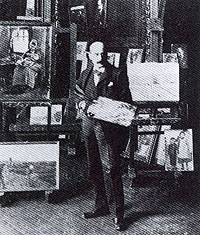 Max Liebermann (1847-1935)
"Max Liebermann was born into a family of millionaire Jewish manufacturers in Berlin. In 1868 he was a student at the Weimar Kunstakademie in early 1868. After achieving a great success with the exhibition of his painting The Goose Pluckers he moved to Paris which remained his base for the next five years from 1873-1877, during which he sent works to exhibitions in the different artistic centres of Europe. In 1878 he moved to Munich, but made regular trips to Holland and Dutch subjects often feature in his work from this time. He moved back to Berlin in 1884 where he would remain for the rest of his life.
In 1870s and 1880s he worked in a late Naturalistic style but in the 1890s adopted a more fluid manner under the influence of Manet and the Impressionists. As the most prominent of the so-called German 'Impressionists' he was subject to even greater official suspicions although his distinction was recognized in 1897 with the award of a large gold medal at the Berlin Salon. He was, therefore, the obvious choice as President of the Berlin Secession when it was founded in 1899, and its enormous success owed much to his good judgement and openness to new ideas. In 1920 he was appointed president of the Prussian Akademie der Kunste, and further honours came on his eightieth birthday in 1927. In 1933 he resigned from his honorary presidency and died two years later.
517 intaglio and lithographic prints by Liebermann have been catalogued as well as a number of woodcuts cut by others from drawings he had made on the block. With the exception of a few early attempts, his prints begin in 1890, when Liebermann was in his forties, and continue to his death, with a break between 1896 and 1900." (Excerpt from The Print in Germany. By Frances Carey and Antony Griffiths)